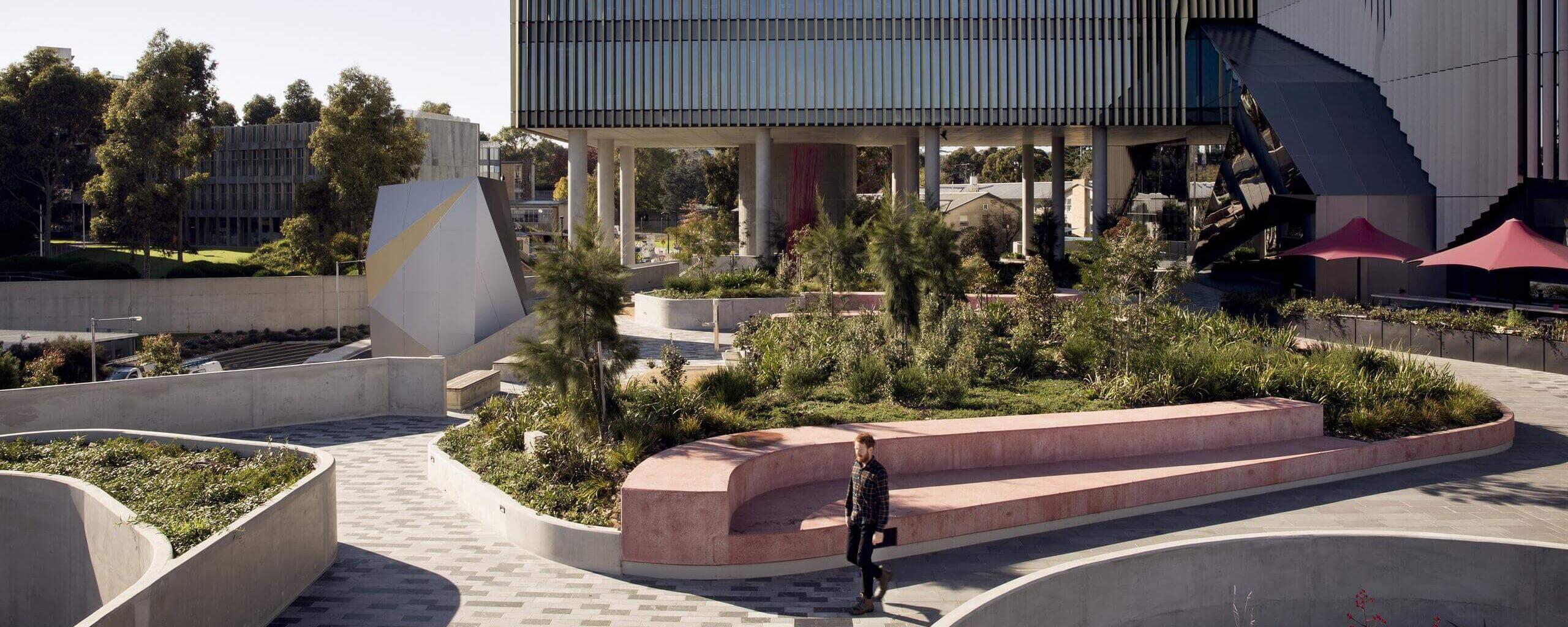
Doktorarbeit an der Deakin University


Deakin University
Location: Melbourne
Founded: 1974
Facts & Figures: 7 Research Institutes, 7 Strategic Research and Innovation Centers, about 2000 Research Studens, about 2000 Research staff
Deakin University is rated among the top 1% of universities worldwide for global research impact (ARWU 2022), with 100% of our research rated at or above world standard (ERA 2018).
Our international research network (spanning 50+ countries) is rated in the top 20 nationally (QS 2023). With over 500 active partnerships across more than 60 countries, we partner with universities, industry and research organisations to empower communities worldwide to realise their ideas and provide transformational innovations for global impact.
Our researchers rank in the top 20 in Australia for academic reputation and citations per faculty (QS 2023) and are listed among the top 1% globally (Highly Cited Researchers 2022).
With a proud history of translating research discoveries into tangible outcomes, our innovation pathways create new products, policies, services and ideas that are changing lives.
Key Research Areas
We’re making a positive impact for our communities through five interconnected impact themes based on our world leading capabilities that address global and national challenges.
- Designing smarter technologies
- Improving health and wellbeing
- Enabling a sustainable world
- Advancing society and culture
- Building safe and secure communities
Top 5 Research Centres
- Institute for Mental and Physical Health and Clinical Translation (IMPACT)
- Alfred Deakin Institute for Citizenship and Globalisation (ADI)
- Institute for Frontier Materials (IFM)
- Institute for Intelligent Systems Research and Innovation (IISRI)
- Applied Artificial Intelligence Institute (A²I²)
Top 5 Research Achievements
- A discovery that enables widespread adoption of hydrogen energy, with development of a mechanochemical way of separating and storing gases that uses a tiny fraction of the energy required for current methods and creates zero waste.
- A breakthrough in the race to discover new malaria treatments, as the malaria parasite becomes increasingly resistant to existing drugs. In collaboration with Monash University Australia, our researchers showed a new compound targets a particular enzyme the parasite needs for survival. This first-of-its-kind confirmation of the biological function of the enzyme enables further development of more potent inhibitors.
- Through Australia's largest recycling and clean energy advanced manufacturing ecosystem, REACH –– the Recycling and Clean Energy Commercialisation Hub, we are working with government, industry and education partners to establish a multi-billion-dollar bioeconomy and drive the nation's transition to a cleaner, greener future.
- Alfred Deakin Professor Fethi Mansouri, Director of the Alfred Deakin Institute for Citizenship and Globalisation (ADI) and UNESCO Chair for comparative research on 'Cultural Diversity and Social Justice', pioneered research on forced migration and asylum seekers that has enabled a deeper understanding of the social impacts of policy.
- Our research expertise at the forefront of cyber security technology development and intelligent systems is advancing practices to protect industry, business and government against unauthorised data access and cybercriminal activity. This is improving safety and security outcomes across the healthcare, transport and construction, security and defence, agriculture and manufacturing sectors.
Numbers
- 7 Research Institutes, 7 Strategic Research and Innovation Centers
- About 2000 Research Students
- About 2000 Research Staff/Supervising academics
Funding
- The GOstralia! Research Centre in cooperation with Deakin University award exclusive PhD full tution fee scholarships open to all faculties. More information
- More funding information and application deadline available here.
Research Projects
DEAK Projects
![]() | |
| University: | Deakin University Melbourne |
| Faculty: | School of Humanities and Social Sciences Faculty of Arts and Education |
| Project Start Date: | as soon a suitable candidate is found |
| Application Deadline: | 30/06/2026 |
| Supervisor Name: | Prof Benjamin Isakhan ([email protected]) |
| Location (City/Campus): | Burwood, Melbourne |
| Project Description: | Two PhD scholarships are offered as part of a broader Australian Research Council Future Fellowship project, entitled 'Heritage and Displacement: Intersections of Exile, Culture and Conflict.' This project aims to investigate the intersections between heritage and displacement, and the differing ways these are understood by displaced people, governments and global agencies. This project expects to generate new knowledge via an innovative interdisciplinary approach that includes developing a novel conceptual framework and conducting interviews. Expected outcomes of the project include unprecedented empirical insights into how displaced people from the Middle East (Syria, Iraq and Palestine) perceive their heritage, and the extent to which this aligns with the policies of relevant actors. This should provide significant benefits, shaping further intellectual inquiry and the responses of key international agencies to heritage and displacement. Each PhD student will undertake an independent research project examining the ways people's connections to heritage has shaped (and been shaped by) their experiences of displacement. The case studies include displaced people from Syria, Iraq and Palestine - including those internally displaced, living as refugees or migrants in the Middle East (Jordan and Lebanon) as well as in the West (Germany, UK, Australia). The PhD students will be expected to develop a strong proposal that includes a fieldwork dimension. Throughout the project, the two PhD students will also be provided opportunities to co-author high-impact scholarly publications, policy reports and media articles, and to present their work at project-specific workshops. The two PhD students will therefore benefit from their involvement in a project of global scope and significance and will be provided exceptional career advancement opportunities under my mentorship and relative to their career stage. |
| Funding Information: | This scholarship is available over three years and offers:
For international students, the awardee will also receive:
|
| Special Requirements: | All candidates are expected to have exceptional written and verbal communication skills (English)
|
![]() | |
| University: | Deakin University Melbourne |
| Faculty: | Institute for Frontier Materials Faculty of Science, Engineering and Built Environment |
| Project Start Date: | as soon a suitable candidate is found |
| Application Deadline: | no deadline |
| Supervisor Name: | Dr Ben Allardyce ([email protected]) |
| Location (City/Campus): | Waurn Ponds Campus, Geelong |
| Project Description: | This PhD project aims to develop a new method to purify silk proteins using liquid chromatography. If successful, it could create a new class of “chromatographically degummed” silk proteins. It will study the properties and interactions of these extracted proteins compared with conventionally processed silk. The project is only possible thanks to a recent breakthrough made by the Deakin silk research team, which developed a new method to re-solubilise silk fibres. If successful, this could lead to next generation silk-based materials with outstanding mechanical properties. Understanding the properties of the extracted proteins in their undegraded state will also help to answer key questions about how silkworms can spin fibres at room temperature with properties that rival many synthetic fibres. The project will also explore the properties of sericin extracted using a newly developed extraction method. This sericin will be explored for applications such as 3D printing or to develop injectable hydrogels. Silkworm silk is a remarkable material; in addition to its use in high end textiles, it has been explored for applications ranging from regenerative medicine, drug delivery, cosmetics and even as edible coatings to preserve fruit and vegetables. To use silk for such applications it must first be “degummed” to remove sericin, the glue that holds the cocoon together. Despite decades of research, the most used degumming method involves boiling cocoons in an alkaline bath to dissolve sericin. This process is damaging to the remaining silk fibres, compromising their mechanical properties and changing silk’s properties in solution completely. |
| Funding Information: | This scholarship is available over three years and offers:
For international students, the awardee will also receive:
|
| Special Requirements: | Additional desirable criteria include:
|
![]() | |
| University: | Deakin University Melbourne |
| Faculty: | Deakin Centre for Marine Science, School of Life and Environmental Sciences; Faculty of Science, Engineering and Built Environment |
| Project Start Date: | as soon a suitable candidate is found |
| Application Deadline: | no deadline |
| Supervisor Name: | A/Prof Craig Sherman ([email protected]) |
| Location (City/Campus): | Waurn Ponds Campus, Geelong |
| Project Description: | Are you passionate about coastal ecosystems and ready to make a meaningful contribution to climate action? This exciting PhD opportunity offers the chance for two candidates to join a well-supported, interdisciplinary research program focused on seagrass restoration in Victoria’s Port Phillip Bay. The two projects available are:
Seagrass meadows are critical to the health of coastal environments. They provide essential habitat, improve water quality, and play a key role in capturing and storing carbon dioxide, making them vital natural allies in the fight against climate change. However, many of these ecosystems have experienced dramatic declines due to urbanisation and changes in land use, particularly in Port Phillip, where extensive seagrass beds once thrived. There is an urgent need to assess the current extent and condition of seagrass meadows and develop targeted strategies for their restoration. This industry supported PhD project will undertake the development of the knowledge and tools required for effective, large-scale seagrass restoration—an important step toward helping Australia meet its net-zero emissions target by 2050. The scholarship stipend includes an industry funded top-up. These PhD projects are in collaboration with experienced scientists, Melbourne Water as the industry partner and Traditional Owners and offer the opportunity to undertake impactful, applied research within a supportive academic setting. If you're ready to contribute to the recovery of a critical marine habitat and make a real difference for climate resilience, we encourage you to apply. |
| Funding Information: | Both scholarships are available over three years (possible six-month extension) and offers:
For international students, the awardee will also receive:
|
| Special Requirements: | Additional desirable criteria:
|
![]() | |
| University: | Deakin University Melbourne |
| Faculty: | Institute for Frontier Materials Faculty of Science, Engineering and Built Environment |
| Project Start Date: | as soon as a suitable candidate is found |
| Application Deadline: | no deadline |
| Supervisor Name: | Prof Matthias Weiss ([email protected]) |
| Location (City/Campus): | Waurn Ponds Campus, Geelong |
| Project Description: | Are you ready to unlock the micro mechanisms of fracture in ultra-high strength steels (UHSS) and shape the next generation of automotive steels? We are offering a fully funded PhD position to develop a new in-situ testing technology that links steel microstructure evolution directly to fracture mechanisms during metal forming. What you’ll do
Target deliverables
Why this project is unique
|
| Funding Information: | This scholarship is available over three years and offers:
For international students, the awardee will also receive:
|
| Special Requirements: | We are seeking highly motivated applicants with a background in mechanical engineering, materials (metal) engineering, manufacturing engineering, or closely related disciplines, who have a strong interest in:
Graduates who are enthusiastic about working at the interface of academia and industry, and who are keen to see their research implemented in real-world steel development programs, are strongly encouraged to apply. |
Deakin-Bayreuth Cotutelle – exploring sodium-ion battery electrode architectures | Deakin University
![]() | |
| University: | Deakin University Melbourne |
| Faculty: | Institute for Frontier Materials |
| Project Start Date: | as soon as a suitable candidate is found |
| Application Deadline: | no deadline |
| Supervisor Name: | A/Prof Robert Kerr ([email protected]) |
| Location (City/Campus): | Burwood Campus, Melbourne and University of Bayreuth (Germany) |
| Project Description: | This project aims to develop the most advantageous combinations of electrolyte and binder through engineering the electrode structures for compatibility with advanced liquid or solid-state electrolytes. Targeted polymer binders will include those based on the non-fluorinated poly(dimethyldiallylammonium) ionomer and naturally occurring polymers such as carrageenan, alginate and carboxymethyl cellulose. These can then be imbibed with electrolytes containing ionic liquids or organic ionic plastic crystals with the goal of imparting ionic conductivity functionality for higher rate charge/discharge performance or developing the electrodes into a solid-state structure for pairing with a solid electrolyte. Sodium-ion batteries are becoming an increasingly popularised lower-cost alternative to lithium-ion batteries, however electrolytes for sodium-ion batteries are less developed than the lithium-based counterparts. Ionic liquid electrolytes developed at Deakin are a new electrolyte class that offers superior safety than conventional flammable and volatile electrolytes. Solid-state ceramic electrolytes developed at Bayreuth have enormous potential in overcoming some of the limitations faced with lithium-based ceramics. Electrode composite structures will also be investigated, focusing mostly on using well-studied active materials such as hard carbon anodes and sodium vanadium phosphate (or fluorophosphate) cathodes available in Bayreuth. You will be awarded with a doctoral degree from each university. The program runs for three years, and you will spend at least 12 months at the University of Bayreuth and the remainder at Deakin University. |
| Funding Information: | This scholarship is available over three years and offers:
For international students, the awardee will also receive:
|
| Special Requirements: | To be eligible you must:
|
![]() | |
| University: | Deakin University Melbourne |
| Faculty: | School of Engineering Faculty of Science, Engineering and Built Environment |
| Project Start Date: | as soon as a suitable candidate is found |
| Application Deadline: | no deadline |
| Supervisor Name: | Dr Clara Usma-Mansfield ([email protected]) |
| Location (City/Campus): | Burwood Campus, Melbourne and University of Bayreuth (Germany) |
| Project Description: | Are you ready to push the boundaries of design, technology, and human performance? Join a cutting-edge PhD research project at the forefront of innovation; where sports science, assistive technology, and advanced manufacturing collide! This PhD project explores the design of personalised, lightweight, and multi-functional structures for the sports and assistive technology sectors. It integrates computational design, advanced additive manufacturing, and intelligent systems to develop user-specific solutions that enhance performance, comfort, and accessibility. The research will focus on polymeric lattice structures with tunable mechanical properties - such as flexibility, energy absorption, and directional stiffness - fabricated using cutting-edge 3D printing and sensing technologies. Experimental and simulative methods will be used to analyse material behaviour across scales, supported by nonlinear computational modelling and AI-driven optimisation. Guided by systems thinking, the project will develop adaptive, sustainable, and user-centred design workflows. Outcomes will contribute to the fields of structural modelling, smart materials, and inclusive design, with applications in rehabilitation, elite sport, and mobility. Candidate profile We seek a candidate with strong expertise in computational design, additive manufacturing, and nonlinear structural modelling. A background in mechanical, biomedical, or materials engineering is essential, along with experience in experimental methods, finite element analysis, and AI-assisted design. You will be awarded with a doctoral degree from each university. The program runs for three years, and you will spend at least 12 months at the University of Bayreuth and the remainder at Deakin University. |
| Funding Information: | This scholarship is available over three years and offers:
For international students, the awardee will also receive:
|
| Special Requirements: | To be eligible you must:
|
![]() | |
| University: | Deakin University Melbourne |
| Faculty: | School of Engineering Faculty of Science, Engineering and Built Environment |
| Project Start Date: | as soon as a suitable candidate is found |
| Application Deadline: | no deadline |
| Supervisor Name: | Dr Samson S. Yu ([email protected]) |
| Location (City/Campus): | Burwood Campus, Melbourne |
| Project Description: | This project aims to develop AI-based monitoring and estimation models for battery maintenance in Australian heavy industries. Xcel Tech provides next-generation technological solutions to electric trucks for the mining industry, the research team will develop novel and application-based models for specific batteries used in Australian heavy industries, such as mining and agriculture, for the purpose of battery health monitoring, optimal charging and fault diagnosis. Due to the uniqueness of Australia’s mining sites, such as high temperature, low humidity and poor internet connection, a new plug-and-play software model and/or hardware device is needed to provide real-time monitoring and fault diagnosis for batteries used in these harsh conditions. These hardware devices and software models can help provide a range of features and functions, including but not limited to:
You will be supervised by Dr Samson Yu at School of Engineering and Associate Professor Wei Luo at School of Information Technology. This multidisciplinary team will provide expertise necessary for the candidate to succeed in theoretical and applied research in this project. Industry partner Xcel Tech will provide batteries used in heavy industries for testing and possible implementation of the developed software models, improving battery efficiency and prolonging battery life and contributing to the decarbonization of Australian industry. This PhD project is in collaboration with Xcel Tech. The project supports the research towards clean energy and battery storage technology. |
| Funding Information: | This scholarship is available over three years (possible six-month extension) and offers:
For international students, the awardee will also receive:
|
| Special Requirements: | Additional desirable criteria:
|
![]() | |
| University: | Deakin University Melbourne |
| Faculty: | School of Architecture and Built Environment School of Information Technology Faculty of Science, Engineering and Built Environment |
| Project Start Date: | as soon as a suitable candidate is found |
| Application Deadline: | no deadline |
| Supervisor Name: | A/Prof Hong Xian Li ([email protected]) |
| Location (City/Campus): | Waterfront, Geelong |
| Project Description: | This PhD project aims to advance the performance and reliability of geothermal heat pump systems for sustainable buildings by integrating cutting-edge artificial intelligence techniques. The research will analyse real-world system performance against design expectations, identify and resolve operational inefficiencies in collaboration with industry partners, and develop AI-driven optimisation strategies to enhance temperature control, flow rates, and coefficient of performance (COP). Through this work, the project seeks to unlock greater energy efficiency and emissions reduction in the built environment, contributing to global efforts to decarbonise a sector responsible for over a third of energy use and CO₂ emissions. The successful candidate will work closely with leading organisations, including PICAC, IAPMO, and the Lawrence Berkeley National Laboratory (USA). If you're ready to lead research on geothermal energy for buildings we encourage you to apply. |
| Funding Information: | The scholarships is available over three years (possible six-month extension) and offers:
For international students, the awardee will also receive:
|
